Used Gaylord Boxes
Reconditioned bulk containers, graded A–C.
Quote used gaylord boxes
Tell us sizes, wall count and quantity — we’ll grade and price it fast.
- Buy, sell, recycle, haul & upcycle — all in one request.
- Graded stock so you never overpay for a box.
- Chicagoland-local pickup & delivery.
Gaylord boxes — also called bulk boxes, pallet boxes or tote bins — are the workhorse of warehousing. Ours are recovered from local manufacturers, inspected, sorted by wall count and graded so you know exactly what you are buying before it ships.
What you get
- Single-, double- and triple-wall constructions in stock
- Standard 40" x 48" footprint to nest with GMA pallets
- Graded A (near-new) through C (economy) — see our grading guide
- Full truckload and layer-pick quantities
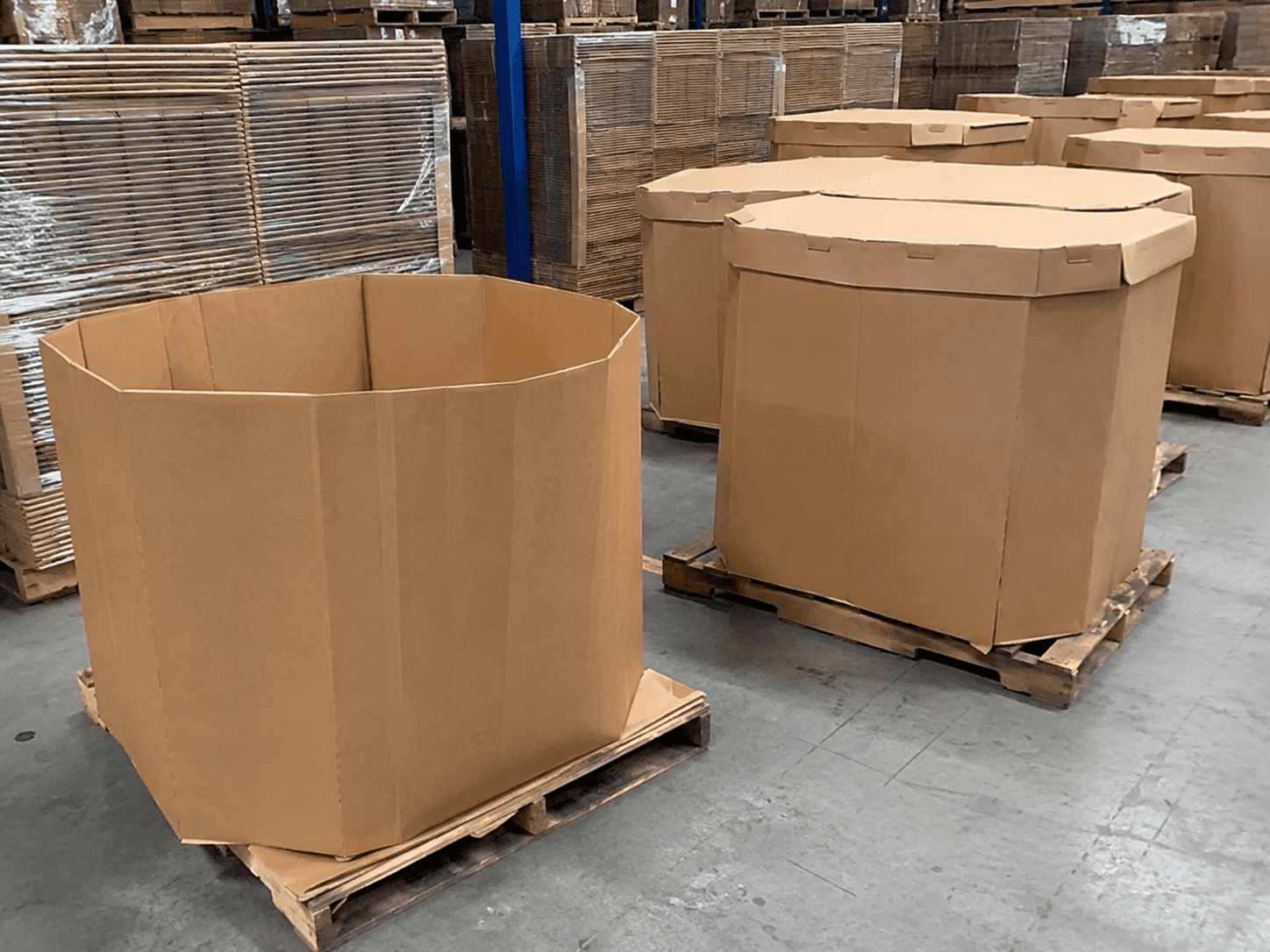
- Octagonal, full-flap and open-top styles
Specs at a glance
| Footprint | 40" x 48" (standard), custom on request |
|---|---|
| Heights | 36" – 48" typical |
| Wall | Single / double / triple |
| Load rating | Up to ~2,000 lb dynamic (triple-wall) |
| Min. order | One pallet layer (25 units) |
Bulk Containers Built To Work A Second And Third Life
A Gaylord is a large corrugated bulk box sized to sit on a standard pallet and hold hundreds of pounds of product. Used Gaylords are one of the best values in packaging because a sound bulk box often has many trips left in it long after its first owner is done. We source, inspect and grade them so Chicagoland buyers get dependable bulk containers at a fraction of new cost.
What A Gaylord Box Is
The term Gaylord refers to a heavy-duty corrugated container designed to be filled while sitting on a pallet, typically matching a common pallet footprint so it can be moved by forklift or pallet jack. They replace loose-fill handling, letting operations move bulk parts, scrap, produce or finished goods in one stable unit rather than dozens of small cartons.
Gaylords come in single-wall, double-wall and triple-wall constructions, and heights vary to suit light or heavy contents. Some have full flaps, some are open-top for easy loading, and many pair with lids or caps. Because they carry serious weight, wall count and corner integrity matter far more than cosmetic appearance, which is exactly what our grading focuses on.
Constructions And Wall Counts
Single-wall Gaylords suit lighter, non-crushing loads and short handling cycles. Double-wall is the workhorse for general bulk use, offering a strong balance of strength and cost. Triple-wall is reserved for the heaviest loads and demanding stacking, where maximum crush resistance and rigidity are worth the premium.
Choosing the right construction is about matching wall count to load weight, stacking height and how many trips you expect. Overbuying triple-wall for a light load wastes money, while underbuying single-wall for a heavy load risks failure. When you tell us what you are putting inside and how you handle it, we steer you to the construction that carries the load safely without overpaying.
Footprints And Load Ratings
Most Gaylords are built to nest on standard pallet footprints so they integrate with existing racking, forklifts and trucks. Getting the footprint right avoids overhang, which causes crushing and unstable stacks. We check that used Gaylords match a standard pallet base so they drop into your material handling without surprises.
Load ratings depend on wall count, box height and how weight is distributed. A properly filled double-wall bulk box handles substantial weight, and stacking capacity depends on construction and how loads are supported. We assess corner and edge strength on every used unit, because those columns carry the stacked weight. If you share target weights and stack heights, we recommend a grade and construction with margin to spare.
Industries And Use Cases
Manufacturers use Gaylords to move parts, castings, plastics and production scrap between processes. Recyclers and reclaimers fill them with sorted materials. Distribution and 3PL operations use them for bulk picks, returns consolidation and overflow storage. In each case the bulk box replaces a lot of loose handling with one forklift-ready unit.
Agriculture and food operations rely on Gaylords for produce, grain, nuts and dry ingredients, often with a food-grade liner. Retail and e-commerce use them for bulk inbound and to stage seasonal overflow. Because so many industries cycle through them, used Gaylords are abundant here, which keeps quality high and prices low for the next buyer.
Grading And Inspection
Every used Gaylord is inspected for the things that actually matter under load: wall count and delamination, corner and edge crush, base condition, prior repairs and moisture. We reject units with soft corners, water damage or compromised bases because those fail exactly when they are stacked or filled heavy. Cosmetic marks that do not affect strength do not disqualify a good box.
We grade by remaining trips and structural margin, not just looks. A premium used Gaylord is clean, square and ready for multiple cycles. A value unit is sound for a single or limited-cycle job at a lower price. Being precise about this is essential with bulk boxes, since a failure means spilled product on a warehouse floor, so we grade conservatively.
Reuse Cycles And Lifespan
A well-built Gaylord is engineered to be reused, and many complete several fill-and-ship cycles before their fiber is spent. Lifespan depends on load weight, handling care, exposure to moisture and whether corners take forklift hits. Kept dry and handled with reasonable care, a double or triple-wall unit can serve for a long working life.
Because they are so reusable, Gaylords are the clearest example of reuse-first economics. Each additional cycle spreads the original manufacturing cost across more shipments and defers making a new one. When a unit finally reaches the end of its structural life, we bale and recycle the fiber. Buying used Gaylords is one of the highest-impact reuse decisions an operation can make.
How To Buy The Right Gaylord
Start with three numbers: your pallet footprint, the weight and nature of your contents, and how high you intend to stack. Those determine footprint, wall count and height. Then decide whether you need open-top for easy loading or full flaps and lids for protection and stacking, and whether the contents call for a food-grade liner.
Send us those details along with quantity and we will match you to current stock and grade, or suggest a close alternate. For recurring bulk needs, a standing order helps us reserve matching units as loads arrive. Buying used Gaylords this way gives you dependable bulk handling at a substantial discount to new, with the reuse benefit built in.
Buy Used Gaylords With Confidence
- Confirm the footprint matches your pallets first
- Match wall count to load weight and stack height
- Pick open-top for loading, flaps or lids for protection
- Add a food-grade liner for produce and dry goods
- Keep bulk boxes dry to extend their reuse life
- Inspect corners since they carry stacked weight
- Order a standing supply for recurring bulk needs
- Share weights and stack heights so we build in margin
Questions & answers
How much weight can a used Gaylord hold?
What is the difference between single, double and triple-wall?
Will a used Gaylord fit my pallets and forklift?
Can I use used Gaylords for food or produce?
How many times can a Gaylord be reused?
How do I choose the right one?
Buying Used Gaylord Boxes By Wall, Size And Load
Used Gaylords are the highest-value item in a reuse-first program because they are costly new and frequently retire with life left. To buy them well you need to read wall count, footprint, wall style, and condition together. This section gives the load tables and inspection checklist to do exactly that.
Anatomy Of A Gaylord
A Gaylord is a large corrugated container sized to sit squarely on a pallet, typically around a standard forty by forty-eight inch footprint, though many variants exist. It may include a separate bottom cap, a body, and a top lid, or arrive as a single wraparound. The pallet is usually separate.
Wall count is the primary strength driver. Single-wall Gaylords handle light, bulky material; double-wall handles denser loads and higher stacking; triple-wall approaches crate rigidity for very heavy or hazardous contents.
Because they are handled by forklift and often reused many times, structural integrity at the corners and bottom matters most. That is where inspection focuses when we grade used units.
Load Ratings You Can Trust
Gaylord load capacity depends on wall count, board grade, and how the box is supported underneath. A double-wall unit fully supported on a pallet carries far more than the same box unsupported. Manufacturer ratings assume proper pallet support and even loading.
Used Gaylords lose some capacity relative to new, especially after prior compression or moisture exposure. We derate expectations for lower-grade units and reserve heavy or stacked applications for the strongest, cleanest boxes.
Never guess on heavy or hazardous loads. Match the box to a conservative capacity and, when in doubt, step up a wall count rather than risk a failure on the forklift.
Wall Styles And Closures
Full-overlap and bulk-cargo styles differ in how flaps and walls join. Some Gaylords have taped or stitched seams; others rely on interlocking flaps. The style affects how much weight the walls carry and how the box behaves when partially filled.
Lids and bottom caps protect contents and add stacking strength. Bins without lids are fine for internal staging but expose contents to dust and moisture in transit or outdoor storage.
When you tell us the closure and lid needs, we can match used units that already have the right configuration rather than shipping a body that lacks a needed cap.
Octagon Versus Rectangular
Octagonal Gaylords use angled corner panels that resist bulging and add compression strength, which is why they are popular for flowable and heavy bulk material. They also self-support better when filled with loose product.
Rectangular Gaylords maximize interior volume and pack tightly against each other, which suits palletized rigid goods and efficient floor use. They can bulge more with loose fill unless the wall count compensates.
Choosing between them comes down to contents. Flowable, dense, or heavy material often favors octagon; boxed or rigid material often favors rectangular.
Condition Grading For Used Units
We grade used Gaylords on corner integrity, bottom strength, moisture history, cleanliness, and prior residue. Grade A units look and perform close to new and suit stacking or shipping. Mid-grade units have cosmetic wear or minor crushing but hold for single-stack internal use.
Lower-grade units go to light-duty staging or a final cycle before recycling. Moisture staining and pest evidence are automatic downgrades because they signal weakened board or contamination.
Honest grading protects your operation. A misjudged Gaylord that fails on a forklift is a safety issue, not just a cost, so we err toward conservative grading.
Reuse Cycles And Economics
A sturdy Gaylord can serve several reuse cycles before its structure no longer justifies another trip. Each additional cycle spreads the original cost across more uses and displaces a new box, which is exactly where reuse-first pays off.
Track how many cycles your units typically survive in your specific handling environment. Rough forklift work and outdoor exposure shorten life; gentle indoor staging extends it considerably.
Buying used at the front of that curve, then recycling at the end, captures most of the value while keeping material out of the landfill longer.
Inspection Before Reuse
Before returning a used Gaylord to service, inspect the bottom for soft or delaminated board, check all four lower corners for crushing, and confirm the walls are not bulged or previously wet. A quick squeeze at the corners reveals most weakness.
Look inside for residue, odor, or pest signs, especially if the box will hold sensitive or food-adjacent material. Wipe or reject units that fail cleanliness.
This one-minute check prevents the vast majority of in-service failures and keeps your reuse program safe and reliable.
Gaylord Wall Selection
| Wall | Load Range | Stacking | Best Contents |
|---|---|---|---|
| Single | Lighter | Low | Bulky, light |
| Double | Medium-heavy | Good | Dense parts |
| Triple | Very heavy | High | Machinery, bulk |
Shape And Condition Guide
| Attribute | Option | Strength | Best For |
|---|---|---|---|
| Shape | Octagon | Anti-bulge | Flowable, heavy |
| Shape | Rectangular | Volume | Rigid, boxed |
| Grade | A clean | Near-new | Stack, ship |
| Grade | B mid | Sound | Internal use |
| Grade | C low | Light duty | Final cycle |
Buy And Reuse Gaylords Wisely
- Confirm footprint matches your pallets before ordering
- Step up a wall count for heavy or hazardous loads
- Choose octagon for flowable or dense bulk material
- Inspect lower corners and bottom before every reuse
- Reject units with moisture staining or residue
- Specify lid and bottom cap needs up front
- Track reuse cycles to time recycling correctly
- Store filled units on solid pallets, never unsupported