We Sell You Boxes
Graded stock, priced by how many lives you need.
Request: We Sell You Boxes
One form covers it — we’ll follow up by email within one business day.
- Buy, sell, recycle, haul & upcycle — all in one request.
- Graded stock so you never overpay for a box.
- Chicagoland-local pickup & delivery.
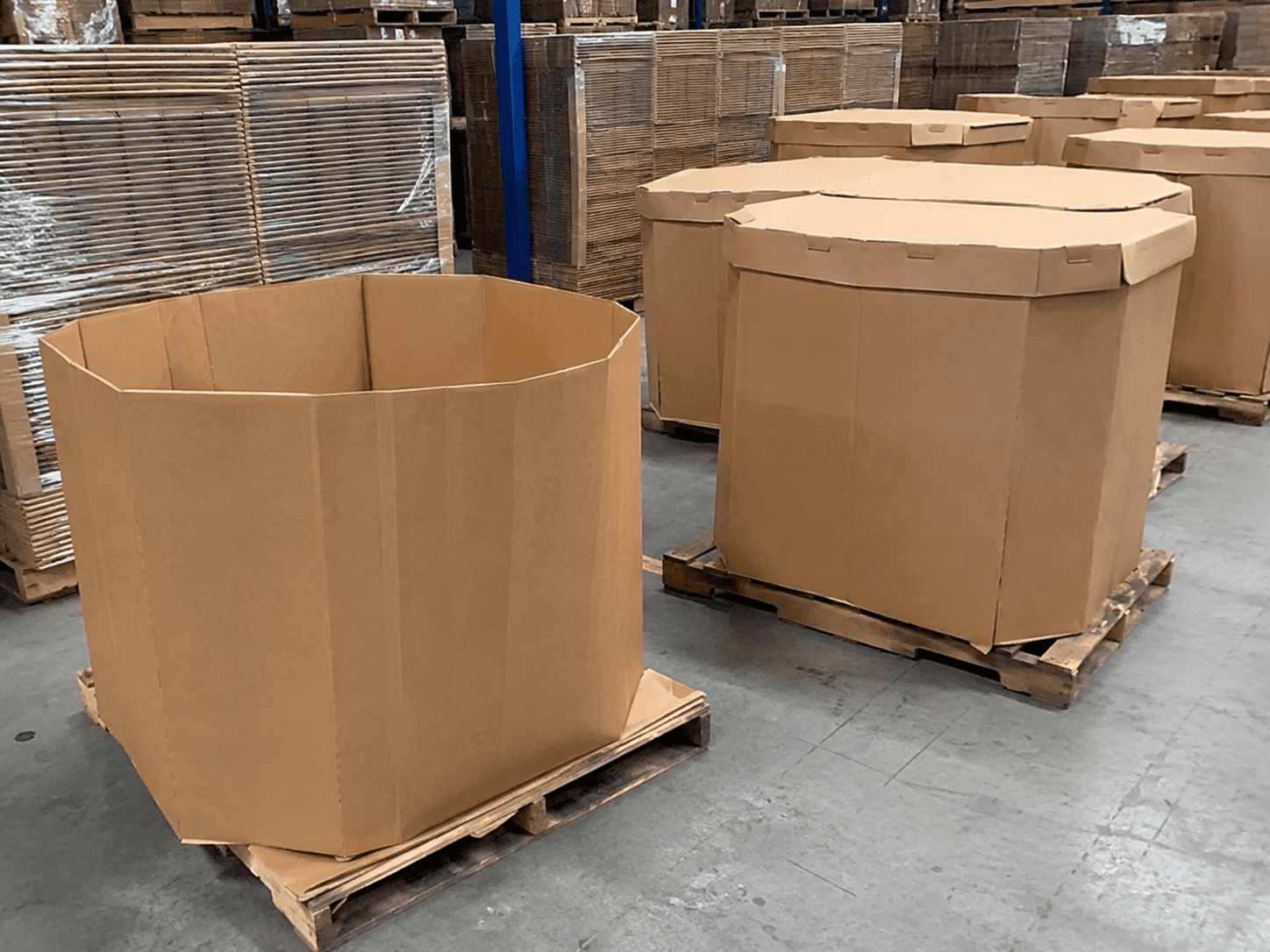
Buy exactly the box you need at the grade you need. Whether that is a truckload of triple-wall Gaylords or a hundred small mailers, we sort, grade and deliver.
- Grades A–C so you never overpay
- Layer-pick to full-truckload quantities
- Local delivery across Chicagoland
How it works
Tell us the job
Product, weight, quantity and how many trips it needs to last.
We match the grade
We pull the right size and grade from inventory.
Delivery or pickup
We deliver locally or stage it for will-call.
Buy the right grade of box for the job, not the hype
The sell desk offers graded used and new corrugated and Gaylord boxes to businesses that want dependable packaging at a fraction of retail. Instead of overbuying premium board for jobs that never needed it, you order to a grade that matches the task. Every unit is graded against the same scale, so what you order is what arrives.
Matching grade to the job
The core skill of the sell desk is fit. A one-way shipment of a rugged product does not need pristine board; a mid-grade box that survives one trip is the right, cheaper answer. A retail-facing unboxing moment might justify top-grade, clean, single-print stock. Storage and internal transfers can run on serviceable lower grades.
We ask what the box will carry, how far it travels, how many times it is handled, and whether a customer sees it. Those answers point to a grade, and the grade points to a price. Overspecifying is the most common way businesses waste packaging money.
Because we hold a range of grades at once, we can usually offer two or three options at different price points for the same size, letting you decide where reliability and cost balance for your operation.
Sample before truckload
No one should commit a truckload of packaging to a line they have not tested. Before large orders we send a sample of the exact grade and size so you can run it through your own equipment, tape it, drop it, and see how it performs with your real product.
Sampling catches the details that specs miss: whether flaps close cleanly on your sealer, whether the wall handles your product weight, whether print or scuffing is acceptable to your customers. It is far cheaper to learn that on ten boxes than on a full trailer.
Once a sample is approved, that grade becomes your reference. Reorders match the approved sample, so you get consistency shipment after shipment rather than a new gamble each time.
From layer-pick to full truckload
We scale to how you buy. Need a single layer or a few pallets to cover a short campaign? We layer-pick from graded stock. Running steady volume? We build full truckloads of a consistent grade and size for the best per-unit economics.
Mixed orders are fine too. A move or fulfillment operation often needs several sizes at once, and we can assemble a combined load rather than forcing you to source each size separately.
Scaling both ways means you are not penalized for being small or forced to warehouse more than you need. Order the quantity the job actually calls for, and step up to truckloads only when the volume justifies it.
Delivery versus will-call
You choose how stock reaches you. The haul desk delivers to your dock on a scheduled window, which suits businesses without their own transport or those ordering volume that will not fit a van.
Will-call works for customers near Alsip who prefer to pick up on their own timing, often to grab a small quantity quickly or to inspect stock in person before loading. Both routes draw from the same graded inventory.
For recurring needs, scheduled delivery on a standing cadence removes reordering friction entirely. We simply keep your approved grade and size flowing at the interval you set.
How to spec an order
A clean spec speeds everything. Give us inside dimensions in length by width by depth, the wall type or grade you want, quantity, and whether print or appearance matters. Tell us the product weight and shipping method so we can confirm the grade holds up.
If you are unsure of dimensions, send a photo with a ruler or describe the product and we will help you land on a size. Guessing at dimensions is the most common cause of a mismatched order, so it is worth a few extra sentences.
Include your delivery or will-call preference and your target date. With those details we can confirm availability, send a sample if needed, and quote a firm price against real stock.
Why used and surplus beats full retail
Graded used and surplus boxes cost less because the fiber has already been made. You skip the premium of freshly milled board while still getting a unit that performs for the job you assigned it. For one-way and internal uses, that gap is pure savings.
There is an environmental payoff too. Every reused box is one that did not require new pulp, new water and new energy to produce. Buying graded stock is one of the simplest sustainability moves an operations team can make without changing its workflow.
The combination of lower cost and lower footprint is why many businesses standardize on graded boxes for the majority of their volume and reserve new board only for the shipments that truly demand it.
Ordering the right box the first time
- Give inside dimensions as length by width by depth
- State product weight and shipping method
- Say whether appearance and print matter
- Request a sample before any large order
- Reorder against your approved sample for consistency
- Bundle multiple sizes into one combined load
- Pick delivery or will-call up front
- Set a standing cadence for recurring needs
Questions & answers
How do I know which grade I need?
Can I test boxes before buying a lot?
Do you sell small quantities?
Will reorders match my first order?
Do you deliver or do I pick up?
Are used boxes reliable enough for shipping?
Matching Grade To Use, Then Delivering It
Buying the right box is about matching grade to the job, not just chasing the lowest price. Under-spec and product gets damaged; over-spec and you overpay. This layer covers how we match corrugated and Gaylord grades to real uses, how ordering and delivery work locally, and why reused boxes are often the smarter buy. We sell both new and used stock, reuse-first, so you get fit-for-purpose cartons without paying for capacity you do not need.
Grade To Use Matching
The first question is not price, it is what the box has to carry and how far. A single-wall RSC handles light, local goods well. Heavier, denser or long-haul freight wants double-wall. Fragile or stacked pallet loads may need triple-wall or a Gaylord.
Getting this match right is where reused boxes shine. A sturdy used double-wall carton often outperforms a thin new single-wall for the same job at a lower cost, because structure matters more than newness for most shipping and storage tasks.
We help you spec by the job rather than by habit. If you have been buying heavier than you need, we will say so; if your boxes are failing, we will point you up a grade.
New Versus Used, Honestly
New boxes make sense when appearance is part of the product, when you need pristine printing surfaces, or when a spec requires certified virgin stock. For most internal moves, storage, and standard shipping, used boxes do the job for less.
Reused corrugated that has been graded for strength is not a compromise; it is a deliberate cost and sustainability choice. You keep material in service and spend less, which is the whole point of a reuse-first supplier.
We will tell you plainly when new is the right call. The goal is fit-for-purpose, not pushing you toward the cheaper or the pricier option regardless of need.
Sizing And Fill Efficiency
An oversized box costs more in three ways: the box itself, the void fill to stop shifting, and the dimensional weight you ship. Right-sizing the carton to the contents cuts all three, which often matters more than the unit price of the box.
We stock a range of common sizes and can advise on which dimensions fit your product with minimal void. If your current box leaves a lot of air, a size change may pay for itself quickly.
For repetitive shipping, standardizing on a couple of well-chosen sizes simplifies purchasing, storage and packing, and lets us keep the right stock ready for you.
Gaylords For Bulk
When you are moving or storing bulk material, Gaylords beat stacks of small cartons. The right Gaylord grade depends on load weight, stacking height and whether contents are food-contact or heavy and abrasive.
Triple-wall Gaylords handle heavy or stacked loads; standard double-wall suits lighter bulk. Food-grade units matter when contents touch the walls. Matching the grade to the load prevents blowouts and unsafe stacks.
We can supply used Gaylords in good condition at a meaningful saving over new, which is often ideal for internal handling and storage where cosmetics do not matter.
Ordering
Ordering is simple: tell us the use, rough dimensions or weights, and quantity, and we match grade and size. If you know exact box dimensions, even better; if not, describe the product and we will spec it.
For recurring needs, we can hold a standing understanding of your sizes so reorders are quick. Knowing your seasonal patterns also helps us have the right used stock on hand when you need it.
Availability of specific used grades varies with what is flowing through the buy desk, so ordering a little ahead for large quantities helps us assemble the right stock.
Delivery And Timing
Delivery is local and route-based. Because we run Chicagoland, we can often deliver on a tight window and, when timing lines up, combine your delivery with a nearby pickup on the same run to keep costs down.
Larger orders are scheduled around load size and your dock access. Flattened boxes ship densely, so a big carton order is efficient to deliver even in volume.
Tell us your receiving hours and dock constraints so the drop lands when someone can take it in without blocking your operation.
Cost Logic Of Buying Reused
The savings on reused boxes are real, but the bigger story is total cost. Right grade plus right size plus reuse pricing usually beats a cheap-per-unit new box that is the wrong size or too thin for the job.
Because we also buy, some accounts effectively net their box spend down by selling surplus back to us later, keeping the same material circulating and lowering their overall packaging cost across a year.
We are happy to walk through the math for a specific application. Often a small spec change saves more than shopping the box price ever would.
Grade To Use Matching
| Use Case | Suggested Grade | Notes |
|---|---|---|
| Light local shipping | Single-wall RSC | Economical, common sizes |
| Heavy or long-haul | Double-wall | Better stack strength |
| Fragile stacked loads | Triple-wall | Maximum protection |
| Bulk storage / moves | Gaylord | Match to load weight |
| Food-contact bulk | Food-grade Gaylord | Clean, certified walls |
| Internal storage | Used double-wall | Cost-effective, durable |
New Versus Used Decision
| Priority | Choose New | Choose Used |
|---|---|---|
| Appearance | Retail-facing | Internal or B2B |
| Print surface | Custom printing | No printing needed |
| Cost | Spec requires it | Lower spend |
| Sustainability | When mandated new | Reuse-first default |
Buy The Right Box
- Spec by what the box must carry, not by what you always bought.
- Right-size to cut void fill and dimensional weight.
- Consider used double-wall over new single-wall for durability.
- Use Gaylords for bulk instead of stacking many small cartons.
- Match Gaylord grade to load weight and stack height.
- Standardize on a few sizes to simplify packing and reorders.
- Order large used quantities a little ahead for best availability.
- Share receiving hours so delivery lands cleanly.