Box Recycling
Certified fiber recovery for what can’t be reused.
Request: Box Recycling
One form covers it — we’ll follow up by email within one business day.
- Buy, sell, recycle, haul & upcycle — all in one request.
- Graded stock so you never overpay for a box.
- Chicagoland-local pickup & delivery.
When a box has truly reached the end of the reuse road, we recover the fiber responsibly. We keep OCC (old corrugated containers) out of the landfill and back into the paper stream, with documentation for your sustainability reporting.
- Reuse-first sorting maximizes value and footprint savings
- OCC baling and mill delivery
- Diversion documentation on request
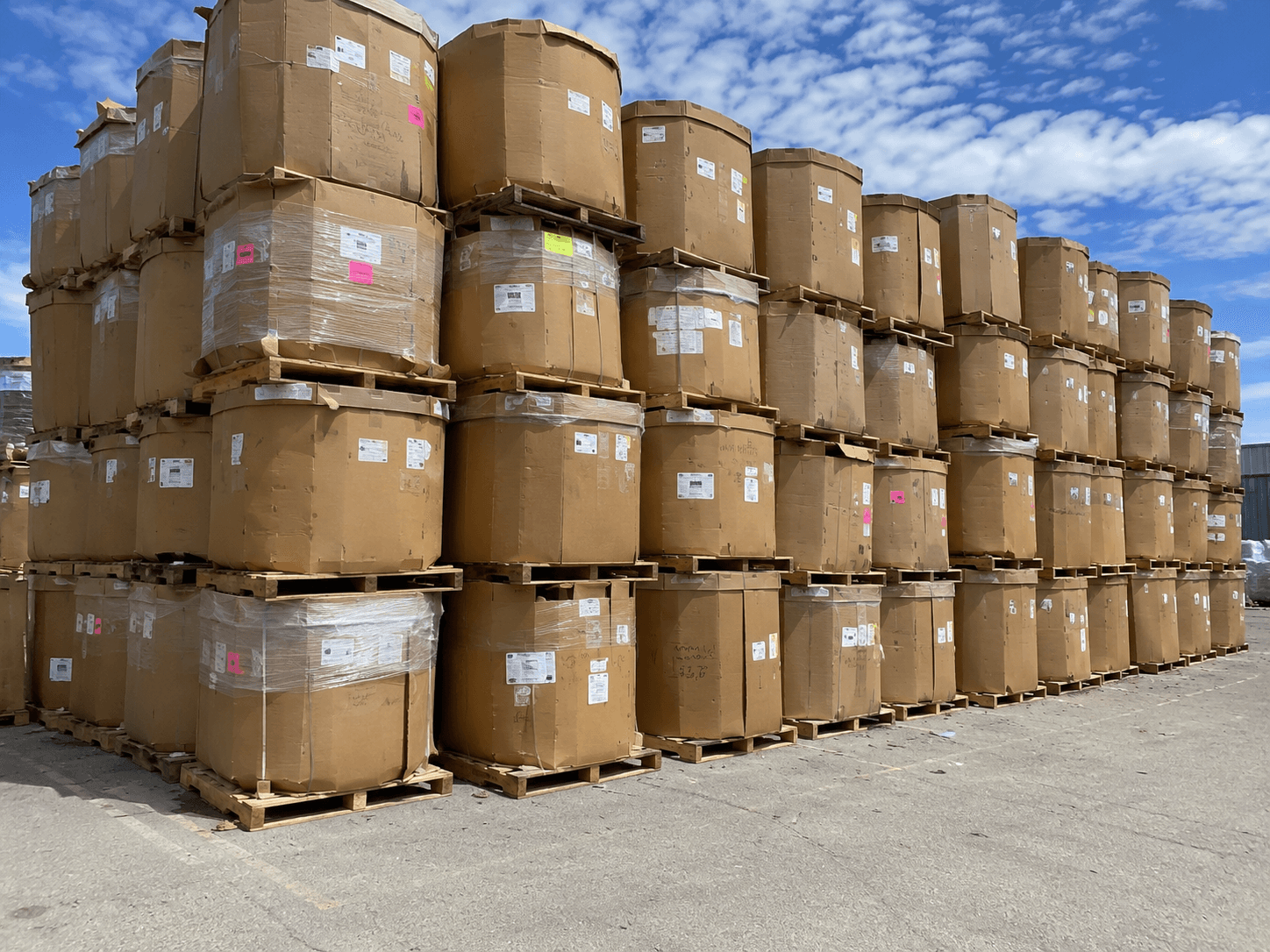
How it works
Collect
Gaylord- or bale-quantity pickup from your site.
Sort
We separate reusable stock from true recycling — reuse always comes first.
Recover
Non-reusable OCC is baled and sent to regional mills.
Report
We can provide diversion tonnage for your ESG reports.
Certified fiber recovery for the boxes reuse can no longer save
Recycling at Boxes Chicago is deliberately the last stop, not the first. Every load that arrives is sorted reuse-first, and only the material that genuinely cannot carry weight again is baled and delivered to certified mills. When recycling is the honest endpoint, it comes with clean documentation you can put in an ESG report, an audit, or a board deck.
Reuse-first sorting comes first
Before anything is baled, every inbound load passes the same graders who serve the buy and sell desks. Their first question is never whether a box can be pulped; it is whether it can be reused. Sound units are pulled out and routed back into sellable stock.
This matters because pulping a reusable box is a waste of the energy already invested in making it. A box has more environmental and economic value standing whole than shredded, and our process is built to capture that value before recycling ever begins.
Only after reuse is exhausted does a box become recycling feedstock. That single ordering, reuse before recovery, is what separates a genuine circular operation from a business that simply calls a recycler.
OCC baling done right
Old corrugated containers, or OCC, are the workhorse grade of paper recycling, and mills pay for clean, well-formed bales. We remove contaminants such as plastic, foam, tape and non-fiber packing, then bale the corrugated to consistent, dense bundles that handle and ship efficiently.
Contamination is the enemy of fiber value. A single stream of wet, food-soiled or plastic-laced material can downgrade an entire bale, so sorting discipline directly protects the recycled value we recover on your behalf.
Well-baled OCC also moves more efficiently to the mill, meaning fewer trips and lower emissions per ton recovered. Good baling is quietly one of the highest-leverage steps in the whole recovery chain.
Delivery to certified mills
Baled fiber is delivered to certified paper mills that pulp it back into new board. Working with certified outlets means the recovery is traceable and legitimate, not sent to some unaccountable destination that undermines the very claim you are trying to make.
That new board becomes the next generation of boxes, some of which cycle back through our own desks. The loop closes physically: your worn-out fiber helps make the boxes another business will buy from us next season.
Delivering locally where possible keeps the recovery leg short, which again cuts the fuel and carbon spent moving material to the mill.
Diversion documentation for ESG
For many customers the record is as important as the recovery. We document what was diverted from landfill so your sustainability team has real figures rather than estimates. That paper trail supports ESG reporting, waste-reduction goals and third-party audits.
Because reuse and recycling are tracked together, you can show a fuller story: not just tonnage recycled, but tonnage kept in service through reuse first. That distinction is exactly what serious reviewers look for.
We report honest numbers tied to actual loads, not inflated precision. Credible documentation is durable documentation, and it holds up when someone checks the math.
Why recycling is the backup
Recycling is essential, but it is energy-intensive. Pulping fiber, cleaning it, and re-forming board all consume water and power. A reused box skips that entire cost. So the environmental hierarchy is clear: reuse whenever possible, recycle only what cannot be reused.
Treating recycling as the default lets a lot of perfectly good boxes get destroyed. Treating it as the backup means the material's full useful life is spent first. Our whole floor is arranged around that priority.
When we do recycle, it is because a box has truly reached the end, and at that point recovering the fiber for a mill is exactly the right move. The point is to reach that stage as late as possible.
What we can and cannot accept
We handle corrugated and Gaylord boxes across a wide range of conditions, including material too worn to resell. Clean, dry OCC is ideal, but we also take mixed loads and sort them, pulling reusable units and baling the rest.
Heavily contaminated material is the challenge. Boxes soaked with grease, chemicals or food waste, or laminated with heavy plastic coatings, can be difficult or impossible to recover as clean fiber. Keeping those separate protects the value of your good material.
If you are unsure whether a load qualifies, email a description and photos to info@boxeschicagoil.com and we will tell you what is recoverable before any truck rolls.
Getting clean, high-value fiber recovery
- Keep corrugated dry to preserve fiber value
- Separate plastic, foam and tape from boxes
- Isolate food-soiled or greasy material
- Flatten boxes to bale more efficiently
- Keep clean OCC apart from mixed waste
- Ask for diversion documentation up front
- Send photos if a load's recyclability is unclear
- Route sound boxes to the buy desk instead of recycling
Questions & answers
Why do you sort for reuse before recycling?
Where does my recycled fiber actually go?
Can you give me numbers for my ESG report?
What contaminates a load?
Do you accept boxes too worn to resell?
Is recycling worse than reusing?
Reuse First, Then Recover The Fiber
Recycling is the safety net beneath reuse, not the first move. When a box can no longer serve, we capture its fiber cleanly through proper OCC handling rather than letting it hit a landfill. This layer explains the reuse-versus-recycle decision, how old corrugated containers are handled, what contamination costs, and how we document diversion for ESG reporting. Done right, recycling closes the loop on material that reuse has already squeezed every trip out of.
The Reuse Versus Recycle Decision
Every incoming box faces one question first: can it serve again? Reuse keeps the carton intact and skips the energy-intensive repulping step entirely, so it is always the preferred outcome. Only when a box fails a strength or cleanliness check does it move to the recycling stream.
This ordering is not sentimental; it is where the value and the environmental benefit both peak. A reused box displaces a new one outright. A recycled box becomes feedstock that still needs processing before it carries anything again.
Our sorting reflects that hierarchy. We divert the reusable fraction first, then bale or prepare the rest as clean OCC, so the recycling stream is only what genuinely cannot be reused.
How OCC Is Handled
Old corrugated containers, or OCC, is one of the most recyclable and valuable paper grades when kept clean and dry. Handling it well means keeping it separate from trash, food waste, wax-coated board and heavy plastic, all of which degrade the grade.
We keep the stream clean from the dock forward. Flattening, keeping material dry, and separating contaminants preserves fiber quality, which is what makes OCC worth recovering rather than discarding.
Clean OCC re-enters the paper supply as feedstock for new corrugated and paperboard, which is why keeping it out of the general waste stream matters both economically and environmentally.
What Contamination Costs
Contamination is the main enemy of recyclable value. Moisture cuts fiber strength and can spoil an entire bale. Wax coatings, heavy tape, foam, and food residue all reduce or eliminate the recyclability of otherwise good corrugated.
The cost is direct: contaminated material earns less rebate or carries a handling fee, and badly mixed loads may not be recoverable at all. Keeping streams clean is the single biggest lever on the economics.
Simple habits prevent most of it: dedicated dry storage for OCC, a rule against tossing trash into box piles, and pulling wax-coated or heavily coated board into a separate stream.
Diversion And The Waste Hierarchy
The waste hierarchy runs reduce, reuse, recycle, recover, dispose. Our whole model lives in the top three tiers. By diverting reusable boxes and recovering the fiber from the rest, we keep corrugated out of landfill wherever it is technically possible.
Diversion is measurable. We can track the share of your material that was reused, the share recycled, and what little, if any, could not be diverted, giving you a clear picture of where your boxes actually go.
That transparency is the point. Many companies claim diversion without being able to show the split; keeping reuse and recycling under one roof lets us report it credibly.
ESG And Reporting
Sustainability commitments increasingly require evidence, not intent. Auditors and internal ESG teams want weights, diversion rates and a clear chain of custody, not a vague claim that boxes were recycled.
We record the practical figures at the point of service: counts, weights, and the reuse-versus-recycle split. Those numbers drop straight into waste audits and ESG reporting without needing reconstruction later.
Because a reused box counts as avoided material rather than just diverted waste, reuse-first often improves your reported footprint more than recycling alone would, and we can help you frame that accurately.
Scheduled Service For Steady Volume
Businesses that generate corrugated continuously benefit from scheduled recycling pickups rather than ad hoc calls. A regular cadence keeps docks clear, prevents boxes from piling into aisles and fire lanes, and smooths your labor.
We set the frequency to your volume so you are not paying for empty runs or drowning between them. As your volume shifts seasonally, the schedule can flex with it.
Scheduled service also keeps the stream cleaner, because material is moved before it can get rained on or mixed with trash sitting too long on the dock.
Gaylords And Bulk Fiber
Gaylords and heavy bulk board recycle well when they cannot be reused, but they need the same clean handling as OCC. A stained or contaminated Gaylord still holds recoverable fiber, though it earns less than clean material.
We assess bulk units for reuse first, then route the rest to fiber recovery. Triple-wall and heavy board carry a lot of fiber per unit, so recovering them properly matters even when reuse is off the table.
Keeping bulk fiber dry and separated from plastic liners or strapping preserves its value the same way it does for standard cartons.
Reuse Versus Recycle
| Aspect | Reuse | Recycle |
|---|---|---|
| Box structure | Preserved | Broken down |
| Processing | None needed | Repulped and reformed |
| Value retained | Highest | Partial |
| Displaces new box | Directly | As feedstock |
| Preferred when | Box still sound | Box failed checks |
Contamination Impact On Fiber
| Contaminant | Effect | Prevention |
|---|---|---|
| Moisture | Weakens, may spoil bale | Dry storage |
| Food residue | Downgrades or rejects | Separate soiled board |
| Wax coating | Not standard recyclable | Segregate stream |
| Heavy tape / labels | Lowers grade | Reduce where practical |
| Foam / plastic | Contaminates load | Pull out before baling |
Keep Recycling Value High
- Store OCC dry and off the ground; moisture is the top value killer.
- Keep trash and food waste out of box piles.
- Flatten boxes so they bale and stack efficiently.
- Separate wax-coated board from standard corrugated.
- Pull foam, plastic and strapping before baling.
- Assess Gaylords for reuse before sending them to fiber.
- Set a pickup schedule that matches your real volume.
- Ask for diversion figures if you report on sustainability.