We Buy Your Boxes
Turn surplus boxes into cash and dock space.
Request: We Buy Your Boxes
One form covers it — we’ll follow up by email within one business day.
- Buy, sell, recycle, haul & upcycle — all in one request.
- Graded stock so you never overpay for a box.
- Chicagoland-local pickup & delivery.
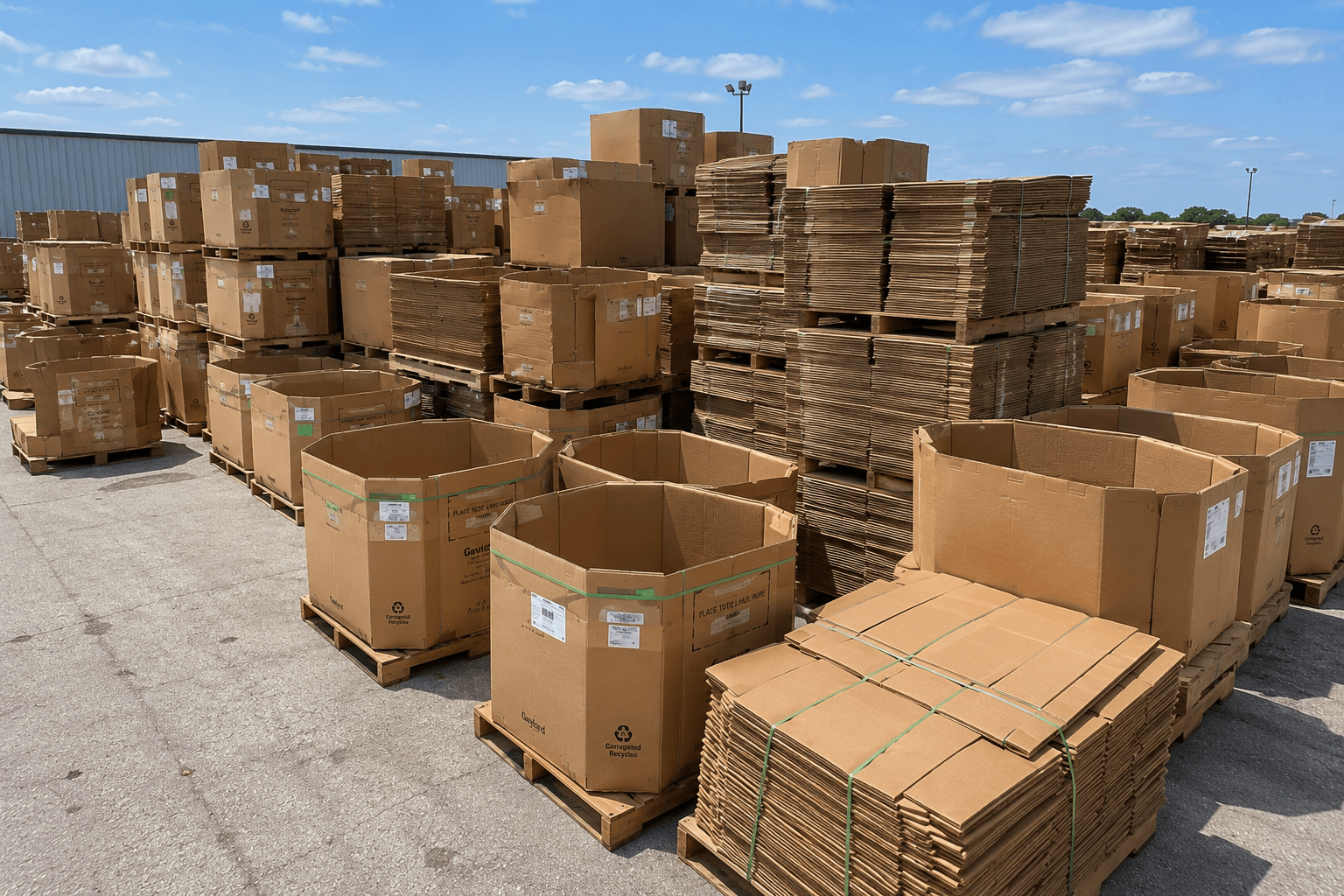
Have a warehouse filling up with once-used Gaylords or overstock cartons? We pay for clean, reusable box stock and haul it away — clearing your dock and turning a disposal cost into revenue.
- We buy Gaylords, RSC cartons, pads and liners
- One-time clean-outs or standing weekly pickups
- Fair, transparent grade-based pricing
How it works
Send photos & counts
Snap the load, note sizes and wall count, and send it through the form.
Get a quote
We price by grade, size and volume and email you an offer.
We pick up
Our trucks collect on your schedule across Chicagoland.
Get paid
You get paid and reclaim your floor space.
Turn stacked-up surplus boxes into revenue instead of a disposal line
If your dock is losing floor space to good boxes you cannot use, the buy desk exists to solve exactly that. We purchase surplus corrugated and Gaylord boxes, grade them fairly, and pay you rather than charging you to haul them away. What was a cost center becomes a small recurring return, and the fiber stays in service instead of heading to a compactor.
What qualifies for us to buy
We look for boxes with reuse life left in them. Standard corrugated shippers, printed retail cartons, oversize boxes and Gaylord bulk containers all qualify when the walls are sound and the units are dry. Both used and new-surplus stock are welcome; overruns and discontinued sizes are frequently some of the best material we see.
Condition matters more than age. A three-year-old box stored indoors on a pallet can outrank a brand-new box that sat in a wet yard. We grade on crush, moisture history, flap integrity, cleanliness and print, not on how long you have owned it.
Gaylords are especially valued because they are expensive to make new and always in demand. If you have octagonal or rectangular bulk boxes stacking up, they are usually near the top of our buy list.
How grade and volume set price
Pricing rests on two levers: grade and volume. Grade reflects how ready a box is for immediate reuse. A clean, uncrushed, single-print box in a common size sits at the top; a lightly worn but sound box sits in the middle; heavily used or contaminated material drops toward recycling value.
Volume matters because handling a full truckload of one size costs us far less per unit than sorting a mixed partial load. Consistent sizes, palletized and counted, earn stronger offers because they move straight to the sell desk with minimal rework.
We quote honest ranges rather than fabricated precise numbers, because real pricing depends on what your load actually contains. Photos and a rough count let us give a meaningful estimate before we ever dispatch a truck.
One-time clean-outs versus standing pickups
Some customers have a single event: a warehouse move, a packaging change, a discontinued line. For those we schedule a one-time clean-out, grade on arrival, and settle in one transaction. It clears your space fast and turns dead inventory into a payment.
Other customers generate surplus every week. For them a standing pickup is far better. We agree on a cadence, a corridor, and a rough grade mix, then run a recurring route so boxes never pile up in the first place.
Standing arrangements also tend to earn steadier pricing because we can plan trucks and predict volume. If you are unsure which fits, start with a one-time clean-out and convert to a schedule once you see the flow.
Turning disposal cost into revenue
Every box you throw away costs twice: once for the compactor or hauler, and again for the value of the fiber you are discarding. The buy desk flips both. Instead of paying to remove material, you receive payment for it, and the fiber avoids the landfill entirely.
The math often surprises operations managers. When you add avoided disposal fees to the buy payment, the swing on a full trailer of clean corrugated can be meaningful, especially on recurring volume across a year.
Beyond dollars, selling surplus generates a diversion record you can use in sustainability reporting. The same load that used to be a waste-line expense becomes both revenue and a documented environmental win.
The pickup process step by step
It begins with an email to info@boxeschicagoil.com describing what you have, where you are, and rough counts, ideally with photos. A grader reviews and returns an estimate range and any prep requests, such as palletizing or separating sizes.
Once you accept, the haul desk schedules a window that fits your dock. Our driver arrives, we verify counts and grade at pickup or on arrival at Alsip, and any adjustments are explained plainly against the grade scale.
Settlement follows the confirmed grade and count. Because everything runs in writing, you have a clear record of what was picked up, how it graded, and what you were paid, with no verbal surprises.
Prep that raises your offer
A little preparation moves your load up the grade scale and up the price. Keep boxes dry and indoors; moisture is the single fastest way to lose value. Flatten and stack like sizes together so counting and grading are quick.
Remove tape, labels and packing debris where practical, and keep contaminated boxes, such as those with food residue or heavy staining, in a separate pile so they do not drag down a clean batch. Palletized, banded loads always outperform loose piles.
None of this is mandatory, but each step you take is one we do not have to, and that efficiency shows up in a stronger offer for you.
Prep tips to maximize your buy price
- Store boxes indoors and keep them dry
- Flatten and stack matching sizes together
- Palletize and band loads for faster counting
- Separate contaminated boxes from clean stock
- Remove excess tape, labels and debris
- Send photos and rough counts with your first email
- Group Gaylords separately since they price well
- Ask about a standing route if surplus recurs
Questions & answers
Do you only buy used boxes?
How do you decide what my boxes are worth?
What if only some of my boxes qualify?
Is there a minimum quantity?
How do I get paid?
Can a clean-out become a regular pickup?
What We Pay For And How Pricing Works
We buy used and surplus corrugated and Gaylord boxes across Chicagoland. This layer goes past the basics into the mechanics: exactly what raises or lowers what we pay, how grading works on a real dock, how pickups are scheduled, and how to prepare material so it earns the best number. Reuse-first means the cleaner and more resalable your boxes are, the more we can pay, because those are the units that go straight back into service.
What Actually Drives The Number
Price is a function of resale demand, condition, consistency and volume, in roughly that order. A grade we are actively reselling earns more than an obscure size we would have to hold. That is why a quick description up front lets us quote against real demand rather than a conservative default.
Condition is the next lever. Clean, dry, structurally sound boxes with intact flaps and no heavy tape or labels command the top of the range. Water staining, crushing, oil, and food residue pull the number down because they cut reuse odds.
Consistency and volume compound the first two. A uniform pallet of one size in one grade is worth more per unit than the same count in a jumble, because sorting labor and resale friction both drop.
How We Grade On The Dock
Grading is hands-on. We check wall type (single, double, triple), size uniformity, flap integrity, moisture, and surface contamination. Boxes that pass go to the resale stream; borderline units get set aside for a closer look; failures route to recycling.
Gaylords get individual attention because their value varies widely. A clean triple-wall or food-grade Gaylord with good corners is a premium unit; a crushed or stained one is fiber. We do not price the pallet as a lump when the units differ.
This on-site grading is why photos help but a walkthrough is better for large lots. Seeing the material lets us commit to a firmer number instead of a cautious range.
Grades We Prioritize
Standard RSC shipping cartons in common sizes move fastest, so we buy them readily when they are clean and flattened. Double-wall and heavy-duty boxes carry a premium because they survive more reuse cycles and serve heavier applications.
Gaylords and bulk bins are a category of their own. Food-grade, triple-wall and octagon styles in good condition are consistently in demand from manufacturers and shippers, and we actively seek them.
Odd sizes, branded exteriors and specialty cartons still have value, but often through the sell or upcycle desks rather than straight resale, which can affect the buy price.
Preparing Boxes To Earn More
Flatten standard cartons and keep them out of the weather. Dry, broken-down boxes stack efficiently, are easy to grade, and avoid the moisture penalty. Wet corrugated loses strength fast and often drops from resale to fiber.
Keep grades and sizes separated where you can. Even a rough sort into a few piles raises the effective value because it removes sorting cost on our end and reveals the resalable volume clearly.
Remove loose contamination and pull obviously destroyed boxes into their own pile. You do not need to detape everything, but the cleaner the presentation, the more the lot tilts toward the paid side.
Pickup Logistics
Because we run local routes, pickups are scheduled around geography and load size. Larger, uniform loads are easiest to plan and often move quickest. Smaller lots may be combined with nearby stops to keep the run efficient.
Dock access, forklift or pallet-jack availability, and whether material is palletized all affect timing. Palletized, flattened, staged loads turn around fastest; loose piles in a back room take longer to handle.
We plan around your operation. If your dock has tight windows, tell us up front so the pickup lands when a crew and truck can actually load without blocking your traffic.
Payment And Terms
Payment reflects the graded, verified quantity, not the estimate. We confirm counts and condition at pickup, which protects both sides from surprises and keeps the settlement honest.
For recurring sellers, terms can be set once and reused, so each pickup is a quick confirmation rather than a fresh negotiation. That predictability is one reason ongoing accounts run smoothly.
Where a lot is mixed, the paid portion and the recycled or hauled portion are itemized separately so you can see exactly what earned value and what carried cost.
When Buying Becomes Selling
Sellers often become buyers. Once we know your sizes and volumes, we can flag matching surplus when it comes in, so the same account that sells summer overflow can source stock in a busy quarter at reuse pricing.
That two-way relationship is where the reuse economy pays off. Your outbound surplus can become someone else's inbound supply within the same local network, and vice versa.
Tell us your recurring needs even when you are selling; it lets us position the right material for you before you have to go looking for it.
What Moves The Buy Price
| Factor | Raises Price | Lowers Price |
|---|---|---|
| Condition | Clean, dry, intact flaps | Wet, crushed, oily |
| Wall type | Double / triple-wall | Thin, worn single-wall |
| Uniformity | One size, one grade | Mixed jumble |
| Volume | Full pallets / loads | Small odd lots |
| Prep | Flattened, staged | Loose, unsorted |
| Demand | Common resale sizes | Rare, hard-to-place sizes |
Grade To Buy Priority
| Grade | Buy Priority | Why |
|---|---|---|
| Common RSC cartons | High | Fast resale turnover |
| Double-wall boxes | High | Survive more reuse cycles |
| Clean Gaylords | High | Strong manufacturer demand |
| Odd sizes | Moderate | Slower to place |
| Branded exteriors | Case by case | Often better upcycled |
| Contaminated stock | Low | Usually fiber only |
Get The Best Buy Price
- Flatten standard cartons and keep them dry and off the ground.
- Rough-sort by size and grade before we arrive.
- Separate Gaylords and grade them individually with us.
- Pull destroyed or contaminated boxes into their own pile.
- Palletize and stage loads near the dock for fast loading.
- Send counts and photos so we quote against real demand.
- Tell us your recurring needs so we can match surplus back to you.
- Book larger uniform loads together for the smoothest pickup.